The Reason To Pick Up A Spare

Peoplewatching is the best. I love being in the vicinity of a crowd. Plant me in a corner seat in a bar, an out-of-the-way chair at an airport, the back row at a wedding, and I am set. Watching interpersonal intersections is endlessly fascinating. The best peoplewatching, though, is when I score an invite to a family reunion for a family other than my own. Family reunion dynamics are flat out epic. It’s like watching bowling. People mill about in tightly formed clusters, maintaining uprightness, then BAM! Someone knocks everyone nine-eyed by telling the story of how Aunt Helen and Aunt Kathy got into a shouting match at Bobby’s wedding over who was sitting at the better table.
Bobby: It was Helen
Me: Don’t start
Bobby: She bribed me with a better gift
Me: You’re making it worse

Come to think of it, the entire family reunion experience is like a day at the bowling alley. It’s loud, you probably won’t like the music, and somewhere, someone is definitely keeping score. The best strategy to employ is to find your team, name it something silly, and keep your head down bowling your frames until it’s last call. If that’s even beyond you, though, stay home and read a book about someone else’s family dynamic, and make sure that book is Commonwealth, by Ann Patchett.
Bobby: I named my team
Me: I’m listening
Bobby: Best Seats In The House
Me: Way to poke the bear

Ann Patchett is a bestselling author, gifted writer, and owner of one of America’s most amazing bookstores because life isn’t fair. Well—it’s fair to HER. Not to me. I have to make special trips to bookstores because I don’t own my own, and when I do get to the bookstore, none of my bestselling books are on the shelf. Ann Patchett has to skirt around the giant Personally Written Bestsellers Section of her own bookstore just to get to her cash register so she can check out the next person in line there to buy one of her books. Commonwealth is her latest novel, a story of how families are made and unmade, of the collective territory of shared experience, and of how memories can tether us to each other even when we’ve left the past behind. It’s a wholly beautiful book, and Ann Patchett is astonishing in her ability to move the narration seamlessly from the past to present to the past. She understands that the key characteristic of family dynamics is baggage.
Bobby: Like a bowling bag
Me: Nope
Bobby: I keep bowling shoes in mine
Me: You own your own bowling shoes?
Bobby: Nope

An uninvited stranger’s attendance at an overdue christening party is all it takes to circumvent the seemingly settled lives of two families. Bert, an indifferent husband and a casual father to three-and-one-on-the-way, manufactures countless reasons to avoid participating in his home life. He wanted lots of kids, it’s just that actually parenting lots of tiny humans is, you know, a bummer. It’s in this spirit that Bert crashes a christening party for a co-worker’s new baby rather than spend a weekend afternoon with his own children. Several gin and juices and one kiss later, Bert has met the woman who will eventually be his second wife, and Commonwealth gets down to the messy business of affairs, divorces, and remarriages.

When all the dust Bert kicks up settles, there are six children in a new blended family that none of them asked for and none of them want. Anyone who grew up in a large family will recognize themselves somewhere in these brothers and sisters. Age, birth order, gender—all those slippery quantifiables that determine what your power is and where you can wield it. As the kids in Commonwealth grow up and make peace with the choices their parents have made, Patchett presents each of their stories in turn. The sibling relationships in this book are front and center, and what makes this book so powerful is Patchett’s ability to give each character’s perspective equal weight while maintaining the flow and the momentum of the story.

One of the universal experiences of childhood is grappling with powerlessness by declaring “When I grow up, I’m never going to do anything I don’t want to do” while one of the universal truths of adulthood is grappling with the discovery that we very often have to do things we don’t want to do. If attending family functions during the holidays is one of the things that you don’t want to do, the characters in Commonwealth are right there with you. Feeling stuck in an old family dynamic gets, well, old. What are the compromises we have to make as grownups to participate in family narratives that are sometimes older than we are?

bowling

If you find yourself stuck at a family gathering, and things are starting to get ugly, book a few lanes at the nearest bowling alley. Keep Aunt Helen and Aunt Kathy on separate teams at opposite ends. Bobby likes to stir things up, so keep him in the middle and give him the team with all the kids to keep him busy. Grab a lane yourself and knock some pins down. Or, if bowling isn’t really your thing, grab a seat where you can see everyone and settle in. The peoplewatching is great at a bowling alley.

#strike

Action Items
If you are close to Nashville, immediately visit Parnassus, Ann Patchett’s bookstore.

The Reason To Walk The Line

One of the fundamental expectations I have of the books I read is that in any given book, STUFF WILL HAPPEN. The plot, characters, story arc, theme, point-of-view….basic book guts should be present, accounted for, and delivering. Honestly, if I wanted nothing to happen in what I read, I’d stick to technical manuals and pre-screened credit offers. Having said that, I do have a threshold for the quality and amount of stuff that happens in a book. There’s a tipping point for when a story can feel overwrought and overdone. Simply put, there’s a fine line between dramatic and drama. Please allow me to illustrate:

The Cubs win their first World Series in 108 years in extra innings in a rain-delayed final game of the series? Dramatic.
People starting fistfights over discount sheets at Target on Black Friday? Drama.
Awaiting the first photographs of Jupiter from the Mission Juno spacecraft? Dramatic.
Any episode of any reality show that includes “big”, “fat” and/or “war” in the title? Drama.

Dramatic story elements are like cake. You can flavor them however you want, layer them for gravitas, and even carve them into weird shapes. Drama is the icing, piped on in swooshy swirls and decorated with sprinkles for flair and impact. Just enough of each makes you crave dessert, but too much and you’re looking at diabetes. Today’s roundup offers up some books that dance along that fine line and deliver a little of both.

Forward: A Memoir (Abby Wambach) Abby Wambach made soccer history repeatedly during her run as a power forward with US Women’s Soccer. Most goals scored in World Cup play? Check. 100 career goals scored? Check. World record for most goals scored (breaking Mia Hamm’s world record, NBD)? Check. Abby Wambach retired as a soccer player in 2015 with 184 career goals in international play, more than any player has ever scored-male or female. Her memoir begins and ends with soccer, laying out her tortured relationship with her body and how she translated that into the mind-blowing, powerful playing style that captured America’s attention. In her private life, Wambach grappled with revealing her sexuality to her family and her public, addictions to pills and alcohol, and a rocky marriage. Now sober and working for ESPN as an analyst and a contributor, Wambach’s memoir is less a reflection on a past long gone than a laying out of her strategy for tackling her demons in her future.
The Fine Line:
Dramatic After spending her post-high school graduation summer skipping workouts, drinking all the beer, and inhaling all the junk food, Wambach showed up for her first workout as a Florida Gator completely unprepared and out of shape. Knowing her spot on the team was on the line, she forces herself to get through drills so punishing that they made me nauseous just reading about them.
Drama Blow-by-blow, word-for-word recreations of looooong text exchanges with friends during personal crises.

Breakfast At Tiffany’s (Truman Capote) If you are only familiar with the movie version of Truman Capote’s novella, then what you’ve seen is a sanitized version of this story, cleaned up for a conventional 1950s audience. The book is infinitely more twisted. On the page, Truman Capote lets his bitch flag fly, and Truman Capote has a Ph.D. in Bitch Flag. Holly Golightly is an opportunistic country girl come to town, looking to make her fortune as someone’s wealthy wife in postwar NYC. Her story is told by her brownstone neighbor and friend, a man who at first observes Holly’s comings and goings and then becomes part of her inner circle. The first person narration puts us uncomfortably close as Holly jumps from various frying pans into various fires. For all her self-destructive faults, Holly possesses a shrewd charm that is just as compelling today as it was when this work was first published. All of Truman Capote’s contradictory longings for fame, social cachet, and privacy are manifested in this jewel box of a book.
The Fine Line:
Dramatic Holly’s touching, pure love for her brother Fred. He is never far from her thoughts and his well-being is her motivation as she looks for financial security.
Drama Holly forces her pet cat out onto the streets of New York to fend for itself because she and her cat are independent souls who “never made each other any promises.”

The Queen Of The Night (Alexander Chee) Generally speaking, you can’t get more dramatic than opera. Opera is the loaded double burger with cheese and bacon on the drama menu. The Queen Of The Night is an opera in novel form, with Alexander Chee delivering a life story so fantastic it’s just this shy of magical realism. Set in Paris during the Second Empire, under the reign of the Emperor Napoleon III and Empress Eugenie, The Queen Of The Night is a master class in social climbing, and falling, and climbing again. Our heroine, Lilliet Berne, is the toast of Paris, enjoying success and fame as a leading soprano. When she is offered the opportunity to realize every singer’s dream of originating a role in an opera written especially to showcase her talent, she agrees to meet with the composer to discuss the possibility. It is then that she discovers the novel on which the opera is to be based is actually her own life story. Lilliet’s quest to find out who spilled her secrets takes the reader through Lilliet’s very eventful life. There is just a whole lot of book going on here, and Chee ingeniously enfolds the tradition and elemental structure of opera into the story. I could not put this book down, but damn, it wore me out.
The Fine Line:
Dramatic Lillet’s childhood on a farm in Minnesota comes to an abrupt end when she is orphaned as a fever wipes out her family.
Drama Prussian soldiers invade Paris and Lillet escapes capture in a hot-air balloon.

Southern Living White Cake, Red Velvet, Peppermint, White Chocolate, Coconut

Burp.

Ultimately, drama tolerance is relative. Your mileage may vary, but there’s an immense literary satisfaction in indulging in juicy, well-executed drama. It’s the holiday season -indulge! Put on your biggest sunglasses, fling that long scarf back over your shoulder, toss your hair, and dive in. Act like you own the place.  It worked for Holly Golightly.

#fineline

Action Item
Maybe get a giant hat too. And a hot-air balloon. Just in case.

The Reason To Get Into The Groove

Once, I was invited to a really big birthday party. I’ll pause while you shake your head in disbelief, but hey, on occasion I slip past the deflector shields and make it onto a guest list. It was a big crowd, a surprise party, and I didn’t know most of the people there. I arrived alone and a little early (NERD ALERT), and the people that I did know that were attending hadn’t gotten there yet. So, rather than stare at the wall or eat all the tiny stuffed peppers out of anxious boredom, I struck up a conversation with a guy standing near me who also seemed a bit at loose ends (but it’s possible he was just eyeing the peppers too). After a quick exchange confirming exactly when we were supposed to yell ‘SURPRISE’ at the guest of honor, he started telling me how he spent his day, which had been a glorious stretch of hours during which he’d put some new parts on his motorcycle. He was really excited. He pulled out some pictures. Several pictures, in fact, of the bike before he’d put the new parts on, pictures of the parts themselves, and pictures of the bike after the parts had been added. As he warmed to his topic, he described the motorcycle parts in detail and why they mattered so much to his overall motorcycle experience. I tried to ask meaningful questions about what he was sharing, but my motorcycle knowledge is limited to the words “motorcycle” and “crotch rocket”, so I didn’t have much to contribute. Seventeen minutes after I’d started talking to this person, he didn’t know my name, but I knew every detail about his motorcycle transformation arc. Also, by this point, most of the tiny stuffed peppers were gone because the other people at the party knew a good appetizer when they saw it. We finally wrapped it up when we had to hide, a critical step in staging a surprise.

While it’s true that I don’t speak motorcycle, I didn’t need to in order to see that my party partner was sharing his passion. Everyone has their own thing, a thing that makes us so excited and eager that people will run if they see you getting fired up about it. Nobody in their right mind will talk to me about books, for instance. I’ve never gone as far as pulling out pictures of books when I talk about them but I’m not saying that won’t ever happen. (Unrelated note: follow Bookreasons on Instagram to see some dreamy pictures of books!) It’s one thing to verbally firehose everyone in your immediate vicinity with all of the ways you enjoy your favorite thing. It’s another thing entirely to make it a condition of any human interaction. There’s a thin line between enthusiasm and obsession, but you’d never prove that by the immersive Ready Player One, by Ernest Cline.

Ready Player One is Ernest Cline’s love letter to 80s geek and pop culture. Wait-strike that. Ready Player One is Ernest Cline’s ticker tape parade celebrating 80s geek and pop culture, complete with Tshirt guns and confetti cannons. Set in a grim future on an overpopulated Earth depleted of natural resources, Ready Player One tells the story of a society that has moved from the exterior to the interior. Virtual reality is the standard, with people spending as much time as possible strapped into full body suits logged into in a fantasy universe called OASIS. When the reclusive inventor of OASIS, James Halliday, dies and invites the whole world to compete to inherit his fortune in an elaborate 80s themed video game, the stage is set for some awesome 80s-style scrappy-underdogs-vs-evil-corporate-goliath competition.

You don’t have to be an 80s kid to enjoy this story. Ernest Cline has you covered even if you didn’t spend part of your childhood begging for an ATARI console or getting chased by PacMan ghosts. James Halliday is modeled on America’s Silicon Valley trajectory, a gifted programmer parlaying time spent tinkering with computers in his parents’ basement into a wildly successful industry and stratospheric personal wealth. In the three dimesional world, James is shy and awkward, finding interpersonal interaction painful. Inventing OASIS allows him to make his perfect reality over and over, as he programs planet after planet that recreate the late 70s and and 80s that he grew up in (my personal favorite being an entire planet consisting of video game arcade/pizza joints, and I want to go there because I hate waiting in line to play Tempest). Retreating into OASIS solves all of James’s social problems, but in his isolation, he’s unable to do the one thing that makes a personal passion so fun – share it with people that share his same devotions.  Upon his death, he’s finally able to get everyone to come to his playground. What would any of us do if we had the leverage to create the exact world we want, to engage with people in the way that makes us the most comfortable? James Halliday uses his money and influence to share everything he loves on the grandest scale possible.

Ready Player One is currently being turned into a movie by Steven Spielberg. I don’t usually get excited about movie versions of books I love, but OMG. I need Steven Spielberg to direct this 80s themed movie like I need air and regularly scheduled hair color appointments. I NEED it. I need all those 80s references filtered through the guy that gave us so much 80s culture. Interestingly, Steven Speilberg has said in interviews that he will not be referencing his own movies in Ready Player One. I don’t like telling Steven Spielberg how to do his job but he needs to change his mind on that. STAT. He’s going to leave Indiana Jones at the door? The Goonies? Whaaaat?

I suppose while I’m quibbling with Steven Spielberg on his directorial choices, I may as air my one tiny grievance with Ernest Cline. In the avalanche of dazzling 80s references in Ready Player One, there is not one appearance by the Material Girl. No Madonna. At all. I am calling a flag on that play and in the sequel I’d better see a Planet Madonna.

corman_8_watermark_madonna

Represent.

#livinginamaterialworld

Action Items
My personal Thanksgiving tradition is to re-read MFK Fisher’s The Gastronomical Me. I hope you get to enjoy your traditions this year. Have a safe & happy Thanksgiving Day!

Photo credit: Richard Corman for Rock Paper Photo

The Reason For A Lot Of Reasons

Bookreasons launched one year ago. I’m a little shocked. I didn’t think I had three months worth of book-babbling opinions, much less a whole year, but here we are. Thanks for indulging me. As it turns out, I’m just a fountain of ever-flowing book babble. Who knew?
You: Everyone
Me: No way! I’m not that obvious
You: Look! A book!
Me: WHERE I’VE READ IT IT’S GREAT LET’S DISCUSS IT
You: The prosecution rests

Today I am throwing back to one of the first Bookreasons posts about one of my all-time favorites, A Wrinkle In Time. You can click here to read it. Madeline L’Engle had a lot to say about tolerance and fear. This book is now getting the film it deserves from the amazing director Ana DuVernay.

menzies

Teaser.

#happybookaversarytome

Action Items
Read all about the A Wrinkle In Time production here.

The Reason It’s Not In Order

There is an intended compulsivity to my To-Be-Read list. Theoretically, I read what’s on my stack in the order in which it was added to the stack. My books should all wait their turn behind the velvet line divider next to the sign that says “Wait Here For Next Available Associate”. It’s a neat, orderly procession because I don’t like my books to crowd me and line management is important. In theory, everything executes like clockwork, one of those Swiss clocks that is a marvel of efficiency and accuracy.

In practice, my To-Be-Read list is less a line of well-behaved books patiently waiting their turn than a crowd rushing the entrance of Toys”R”Us the day after Thanksgiving. There’s pushing, shoving, hair-pulling, and at least one fistfight. I want to be methodical and deliberate, I really do, because from the outside that approach seems marvelously productive. It’s a practice I have yet to translate into reality. For example, I’ve had Stacy Schiff’s The Witches on my list since the day it came out. That book is a straight-up diva though and I haven’t had the necessary uninterrupted time that a diva demands. Then there are my disappeared titles, because I lost my working TBR list in a disastrous iPhone update a few months ago so there are a bunch of books that I know I want to read but no longer know the names of. WHYYYY APPLE WHYYYY??? Then, of course, there are the books that are recommended to me by other enthusiastic readers. I get super pumped for those because sharing is caring and asking me to read a book you like is a secret mystery-coded message that says you like me BEST of all the people you know. It’s ok! I won’t tell anyone else that I am your favorite. If all of this feels like an elaborate justification as to why I just had to bump Mary Shelley’s Frankenstein to the top of the stack last week, well, your instincts are dead on.
Me: HAHAHAHAHA
Mary Shelley: Whut
Me: DEAD on. Get it??
Mary Shelley: Ugh

I suppose if any book is going to push to the front of the line with terrible manners and superhuman strength, it would be Frankenstein. The story behind the book is almost as famous as the book itself. In 1816, Mary Shelley and her husband the poet Percy Shelley were on an extended European tour, staying away from England for really good reasons that included avoiding Percy’s first wife Harriet, who was a tad cranky because Percy had run away with Mary while still married to Harriet. While in Switzerland, Mary, Percy, Mary’s stepsister Jane and their friends Lord Byron and John Polidori found themselves stuck inside on a rainy day. They challenged each other to tell ghost stories to pass the time and that was one hell of a one-up story session because that little party germinated both the vampire genre (hat tip to John Polidori) and the Frankenstein monster.
Percy: Whatcha doing Mary
Mary: BRB writing classic horror novel
Percy: Well “classic” might be premature—
Mary: also inventing science fiction
Percy: Okay, sure, it’s original but-
Mary: what’d YOU do today
Percy: whatever

I hadn’t read Frankenstein in a long loooong time and in truth, I didn’t read it that closely the first time. It was assigned reading in a British Literature class, a class in which the volume of assigned reading was honestly insane. The teacher’s approach was basically “British people wrote a lot of stuff. Let’s read all of it in two months.” It was all I could do to keep up with it. By the time that class was over, I was so burned out I hated England, Princess Diana, tea, Masterpiece Theater, and Monty Python. As a result of this shallow immersion, most of the Frankenstein lore I was carrying around in my head was supplied by Mel Brooks. (I’m not even sorry because Gene Wilder’s hair in “Young Frankenstein” is perfection.) When a friend told me she was reading Frankenstein for her book club and struggling a bit with it, I couldn’t abandon her to the wilds of English gothic horror. I had been there, and I have the scars to prove it. It was time to up-end my TBR stack yet again, stop skating on my sketchy, force-fed-British-Lit Frankenstein memories, and give that tall drink of mostly dead water the attention it deserved.

One trip to the used bookstore later, I was prepared to be scared. The Frankenstein monster we know, the force of nature that is a dangerous combination of brute power and pure instinct, is a creepy figure, but the Frankenstein monster in the book is actually far removed from today’s pop culture, neck bolt version. The monster’s creator, Victor Frankenstein, is an arrogant scientist who single-mindedly pursues the ultimate scientific challenge – creating life in inanimate tissue. Once he reaches his goal, he abandons his creation, unable to come to terms with the ramifications of his actions and unwilling to accept responsibility for his profound discovery. Mary Shelley curses her monster with self-awareness, a being who is unable to feel gratitude for the life he was given because he knows he is ultimately not of the world that he’s living in. This book is wildly modern, and the questions Mary Shelley raises about the ethical pursuit of knowledge are even more relevant now. I was also stunned at what a huge whiny man-baby Victor Frankenstein is. I missed that completely the first time around. I was rooting for the monster, frankly.
Mary: Me too TBH
Me: Right??

the-inheritance

Stackus Interruptus.

My TBR stack is still a work in progress, a messy monster of my own creation. After I finished Frankenstein, I went back to the next book in the stack and promised myself no more interruptions. I’d completely forgotten that Charles Finch’s new one in the Charles Lenox series, The Inheritance, came out this week. Ooops. Charles Lenox has VIP status at my club so he always goes to the front of the line. I’ll get back to the stack right after I finish it.

#frontoftheline

Action Items
You might be able to catch the National Theater Live’s version of Frankenstein. It’s making encore rounds now. Check it out here.

The Reason To Go All In

A few weeks back, I posted a detailed cry for help in which I described how distinguished author Ben H. Winters was holding me hostage. (You can read about Ben H. Winters’ indifference to my plight here.)As a result of my signal flare, a friend crawled into my foxhole with me and picked Underground Airlines for her book club read. When I asked her what she thought of the book, she 1.heroically ignored my clapping and bouncing up and down when I asked the question because I could not WAIT to effuse about the book with someone and 2. Said she really liked it but was a bit ticked because she does not usually read trilogies. Confused, I pointed out Underground Airlines is a standalone book. She responded “Are you kidding? That is the first book in a trilogy if I ever saw one. Like we are NOT going to get the next part of that story?”

Well, hell. Upon reflection, Underground Airlines could be the first in a trilogy. For the record, I asked the internet if there are any follow-up books forthcoming. The internet said “What the hell? This book was only published in JULY. Slow your roll.” Okay, internet, CHILL, it was just a question. It’s interesting, though, that instinctive phobic reaction so many people seem to have about trilogies. I don’t have any science on this or anything. It’s just based on my experience recommending books to people only to be asked “Is that book in a trilogy? I don’t do trilogies.” It is a delicate and serious thing to open one book knowing that you are in essence opening three. It takes your book status from “in a relationship” to “it’s complicated” to “what am I, getting married here?” at warp speed.

If you are trilogy-shy, I am here to support you by cramming a trilogy recommendation into your reluctant hands. Don’t think of it as a trilogy! Think of it as…a house party where you get to hang out with some jacked up, compelling people. Think of it as a three-day weekend in an exotic place you’ve never been. Think of it as a blind date set up by someone you really, really trust and who would NEVER stick you with the book equivalent of Jon Gosselin. Think of it as your chance to find some brand new literary crushes.  Do not deny yourself the pleasure of Lyndsay Faye’s brothers Wilde, Valentine and Timothy, the heart and heartbeat of the Gods of Gotham trilogy.

The Gods of Gotham, Seven for a Secret, and The Fatal Flame tell the story of the founding of New York City’s modern Police Department, a story that Lyndsay Faye is uniquely qualified to tell. Her first book, Dust and Shadow: An Account of the Ripper Killings, is a Sherlock Holmes story narrated by John Watson. (It is a standalone book, YES, if I can’t talk  you into a trilogy.) That Sherlockian momentum that encompasses a diverse, lively setting, organic, intricate plots and memorable characters carries forward into the Gods of Gotham. If you read this trilogy for no other reason, do it to cast the movies in your head, because the Wilde brothers and all the New York citizens that surround them are going to get under your skin. Lyndsay Faye is a genius at characterization and she gives her characters a solid, startling setting in which to do their thing. New York City in 1845 was multiple worlds existing in parallel: Tammany Hall and tenement immigrants, abolitionists and brothel owners, the desperately poor working class and the newly wealthy industrial barons. When those streams cross, all kinds of stuff is liable to happen. Right about now, you’re expecting me to break down each of the books with a little high-level summary. TWIST! I am not going to do that. What I am going to do is tell you about MAH BOYZ.


trilogy

Don’t think of it as a trilogy. Think of it as three books tied together by common characters, story arc, and setting.


Timothy and Valentine Wilde are themselves the embodiment of 1845 New York City. Valentine Wilde is the older brother and the political animal, an enthusiastic member of the party machine and a powerful local celebrity. Valentine doesn’t see corruption – he sees opportunity. He sees favors granted, favors denied or favors wrangled. He delights in the maneuvering and the gladhandling that was necessary to rise in the party ranks. I am in awe of Valentine. He’s scary smart and subversive and sort of amoral. Also, his name is Valentine. He gives me the vapors. If I had gone to high school with Valentine Wilde, I would have spent endless hours figuring out how to get him to notice me. MORE EYELINER? BIGGER HAIR? TELL ME.

My breathless crush on Valentine in no way decreases my mellower-but-still intense crush on the younger brother and main character of the trilogy, Timothy Wilde. Timothy is an idealist, disgusted by the push-or-be-pushed vibe that defines almost every interaction in New York. Where Valentine Wilde is the sweeping energy and breakneck pace of the city, Timothy Wilde is its humanity. He’s noble, he’s stubborn, and he’s the perfect candidate for a position with the brand new Police Department: politically protected by his influential brother but himself disinterested in politics, he just wants to solve some crime and make things a little safer for people who otherwise can’t fend for themselves. Throw in his unrequited love for the beautiful and unattainable Mercy Underhill and omg I have the vapors AGAIN. OVER HERE, TIMOTHY. I’M VERY SENSITIVE. I’LL HOLD YOUR HAND AND WALK ON THE BEACH IN THE RAIN.

Come for the characters, stay for the plots, move in for the fun. Jump in! The water’s fine! However much you enjoy them, though–remember, the Wilde brothers are mine. I’ll share, but if you try to take my men, someone better hold my earrings because we are going to throw down.

#getWilde

Action Items
The regular publishing day for Bookreasons is moving from Tuesdays to Wednesdays.If you would like to get email notifications of new posts, please click on the ‘Follow’ button in the lower right-hand corner of your screen, enter your email address, and click on the link in the verification email.

If you already subscribe, thank you! I will forever be grateful (and baffled) for your willingness to endure my nonsense.

The Reason To Polish My Trophy Case

For a very long time, it did not occur to me not to read any book I started cover to cover.  I didn’t know I didn’t have to finish. Never giving myself permission to put a book down means I’ve done some serious hatereading. (Hatereading is my least favorite kind of reading. It ranks below carsickreading and interruptedreading.) It’s not like I’m going to qualify for the ‘Always Finishes The Book’ Prize because it doesn’t exist and there’s no scoreboard for it anyway. No one is keeping book scores except for the unreasonable compulsive asshole who lives in my head, and she should shut up. Letting meanless scorekeeping sabotage my Main Fun Thing by sucking all the fun out of it is somewhat shortsighted.  Reluctantly, but necessarily, I have given myself an out in some specific instances when it becomes clear and a book and I are not compatible. Even though the breakups are handled gently and with respect – I always take the book out for coffee, and I NEVER give the bad news over a text message -there is a little part of me that feels like I let the book down. Please join me as we twirl around like happy autumn leaves in a mini tour of my Hall of Shame.

The Girl With A Dragon Tattoo I tried with this book. Twice. I still can’t believe I could not finish it. TWICE. The Girl With The Dragon Tattoo has all of my Basic Crime Fiction requirements: down-on-his-luck grizzled male narrator, badass female protagonist, and a film adaptation starring Daniel Craig. When I first picked it up it seemed Smilla’s Sense of Snow-ish, and I was down with that because I loved that book. When I could not get into it, I figured I was just was not in the mood in that moment to feel Swedish so I put it aside. Then suddenly everyone I knew had read it and then the movie was announced then everyone had read the second book in the series I was all, ok, what the hell am I missing here? I hunted up my copy, took it with me on a vacation, and I cracked it poolside. It was slow going but I kept telling myself it was going to get better! Any page now! After I’d been at it about half an hour, the friend I was with said “OH MY GOD WHAT IS WRONG YOU KEEP MAKING SIGHING NOISES EVERY FIVE MINUTES STOP IT RIGHT NOW OR ELSE.” My involuntary breathing hated the book as much as I did, and my friend hated my exasperated sighing. It was time to bail. Sorry, Dragon Tattoo. I wanted it to work out as much as you did.

The Hunt For Red October Like The Girl With The Dragon Tattoo, Tom Clancy books qualify on paper as something I would really enjoy. (pause to hold for laughter at my awesome play-on-words-paper joke) But I bailed on The Hunt For Red October in the middle of a 3-page description of…omg, something about sonar? I leave these books for the gearheads who can truly appreciate the magic of a dimly lit submarine full of gauges, each requiring their own lovingly detailed description of detail-y details. Gauge on, my gearheads.

20,000 Leagues Under The Sea Ok, you got me. I did not bail on this book. I’m just here to say I am never ever going to read it ever. This book has a giant squid in it, and I don’t read about spiders. I know a squid is not a spider but it’s close enough because 8 legs and squids are WORSE because suction cups all over the legs. The only book I have ever read about a spider was It and that is only because I DID NOT KNOW Stephen King was going to go all giant town-eating spider on my ass and by the time I figured it out I was too far into the book to stop. That is the last time I let Stephen King bait me with a serial killer clown and switch me to a sewer-dwelling Charlotte with a gland problem. In fact, consider this whole paragraph my official request that bookstores have an Octopod/Arachnid section where all books even remotely related to spiders or squids are shelved. This will make it convenient for me to never get near that section.

Eat, Pray, Love  I know. You loved it. Your friends loved it. Everybody everywhere loved it. I tried. I really did. I’m dead inside. I donated my copy to the library so everyone can continue to love it.

A Brief History Of Time Shut up. You didn’t finish it either.


ribbon

Thanks for playing.

It can be difficult to tell when it’s not working out with a book because sometimes my best reads are the ones that made me work a little. When I find myself fantasizing about accidentally dropping a book off a roof, I know it’s time to break up. It’s ok. We can’t make it across the finish line every time! I’ll pick up my participation trophy on the way out.

#hatereading

Action Items
Book breakups are hard. Give yourself time to grieve.

Image courtesy Creative Commons

The Reason To Bring A Diva, Part Deux

I had a cross-country flight today–4.5 uninterrupted hours in the air, perfect for some quality time with a diva book. Sadly, no delays, so ONLY 4.5 hours. But still. SQUEEEE.

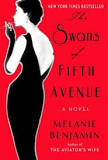
ICYMI, my very first diva book was Truman Capote’s In Cold Blood. For today’s flight, I brought along The Swans of Fifth Avenue by Melanie Benjamin.

Swans

Which, as it turns out, is about Truman Capote and his life with the social elite of New York City during the time that he wrote In Cold Blood. I was reading about Truman Capote’s In Cold Blood. ON A PLANE. It’s all so serendipitously meta that I giggled pretty much the whole flight, which I assure was you was not appropriate considering the subject matter of the book.

Anyway, I recommend The Swans of Fifth Avenue, and not just because I’m on a diva book buzz.

I got so worked up about the whole thing that I’m immediately re-reading In Cold Blood, so if you need me, you know where to find me.

#bringadiva


The Reason It’s A Little Sloppy

I love unapologetic, in-your-face perfection. I’m not talking about crafted, photoshopped perfection, the kind of shiny perfection intended to seduce you into purchasing a car or mascara or plastic surgery. (True story: I always buy the mascara. Because MASCARA.) I mean irregular, sideways perfection. Take flamingos, for instance. Flamingos are ridiculous. A flamingo’s purpose is to live in smelly marshy places and eat shellfish out of shallow, muddy water. They actually scoop up mud and filter it in their beaks to extract shrimp (and algae – which goes to prove the old saying, “It’s a good day when I can eat shrimp and algae!”). So, not only do these birds have weird taste in sushi, they are sucking the sushi out of wet dirt. Do you know what flamingos should look like? Short sloppy mud vacuums. Instead, they are perfect, pink and sinuous, elegant and gawky as they tower above the shallow water on one leg. There is no reason for flamingos to be this awesome, no good reason to be the color of a tequila sunrise and shaped like a couch pillow with dowels tied to it, but there they are. Taken apart—curvy neck, knobby legs, spring-break-airbrushed-t-shirt pink-the pieces are kind of silly. Together, they are unpredictably, undeniably perfect.

Photoshopped, staged, bland, watered down, crowd-pleasing perfection: it’s fun in its way, but too much of it leaves me longing for something deeper. There’s only so many times I can really believe that people “woke up like this”. No, you didn’t. You probably woke up like me: haggard enough to scare cats and in dire need of enough caffeine to restore the ability to use multisyllabic words. Imperfect perfection is so much more interesting. It’s like only listening to Taylor Swift songs, or being asked to live on a diet of nothing but butter noodles. After a few days of nothing but butter noodles, you’d jump for some eggplant.
Perfection: hey, don’t bring butter noodles into this
Me: sorry
Perfection: they are BUTTER NOODLES and they don’t deserve this shit
Me: I should have used a different example
Perfection: yes you should have, sicko

There aren’t that many perfect books, and there are even fewer perfect books that stand as an author’s first and only book, and even fewer that are a first novel that win a Pulitzer Prize. Whatever that formula is, Harper Lee figured it out when she published her one perfect book. Just one tiny, NBD, seismic, atom bomb of a book. To Kill A Mockingbird is rare, a quintessentially American novel about growing up in the Jim Crow South. This book is loaded with iconic literary BFFs and everybody has a favorite: Scout, Jem, Calpurnia, Atticus,  Boo Radley. (Back up off Boo. He is MINE.) Scout’s relationship with her father is so well-written and so realized that as readers, we effortlessly project ourselves into the story because we see ourselves there. By all appearances, To Kill A Mockingbird woke up like this.
Perfection: So you’re saying TKAM is like butter noodles
Me: um NO
Perfection: Pretty sure that’s what you said

To Kill A Mockingbird was published in 1960 and immediately made Harper Lee famous. Foregoing a splashy public life, she lived privately in her Alabama hometown and died in February 2016. It was nothing less than a bombshell when it was announced in 2015 that she was publishing a second book, a companion to To Kill A Mockingbird. Mildly put, Go Set A Watchman was (and is) controversial. Written in 1957, it tells the story of an adult Scout Finch, returning to Maycomb to visit her father. Harper Lee had submitted the book for publication, but it was rejected and the manuscript had been considered lost. Go Set A Watchman was a hot topic. Did Harper Lee truly consent to publish, or was she a victim of elder abuse? Would the book alter the essence of Atticus Finch? People couldn’t wait to read it. People were boycotting reading it. People bought the book, then returned it in protest. I hesitated to read it because I didn’t want to spoil my perfect memory of my perfect experience reading To Kill A Mockingbird, but ultimately my curiosity got the better of me. I ordered a copy and silently asked Harper Lee to forgive me.


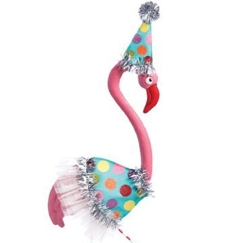
flamingo

Flamingos: majestic and dignified.

Which came first, the Mockingbird or the Watchman? I didn’t know what to expect when reading Go Set A Watchman, but I was not expecting it to be so genuinely weird. It was like walking into a room full of people I’d known for years only to find that everyone has switched voices. The words and the sounds are familiar, but they’re coming from a brand new face. It was disconcerting. That familiarity makes it tempting to compare the two books, but Go Set A Watchman, for me, isn’t a book so much as it is an unusual look into the work it takes in order to produce something as perfect as To Kill A Mockingbird. You can’t hide genius, and Harper Lee’s gentle, humorous, devastatingly insightful voice still shines through in Watchman-unevenly, but it shines. The quicksilver flashes evident in Watchman become the lightning in the bottle that is Mockingbird.
Perfection: Same with butter noodles
Me: Not sure where you’re going here
Perfection: You have to boil the water first
Me: Do you eat anything else?
Perfection: Sometimes plain spaghetti

To Kill A Mockingbird was a book I’d taken for granted, a book so good and so ubiquitous that it was easy to assume that it just woke up like that. I mean, by the time Demi Moore is naming her kids after the characters in a book, it seems like that book has perhaps reached blandly perfect maximum cultural saturation. Go Set A Watchman reminds me that To Kill a Mockingbird didn’t just happen. Harper Lee had to figure it all out, had to put all the pieces together, take them apart, and put them back together again and again. Like a flamingo standing in murky water, To Kill A Mockingbird is startling, more beautiful that it needs to be, and crookedly, deliciously perfect.

#butternoodles

Action Items
Celeste Barber is a perfect flamingo on Instagram. Go check her out @celestebarber.


The Reason To Crack The Cover

I’m on a bookstreak-three really great books in a row, so I’m sharing my mojo. If you need something to help pass some down time as you fire up your summer this week, one of these might help. If you’re already in the middle of something you love, give it a shout-out in the comments.

Bull Mountain, by Brian Panowich, opens with a quote from Julius Caesar, so you know shit is about to get real. (Hint! Julius Caesar = stabby betrayals that are stabby).  This story about the legacy of violence and misplaced loyalties through three generations of a North Georgia family is blunt, brutal, and rapid-fire.  The insular Burroughs clan, career criminals trying to turn from locals running ‘shine to  major racketeers moving meth and guns, are Olympic contenders at grumpy grudgeholding. They all made me really nervous and I found myself yelling warnings at the characters while I was reading the book: “GET OUT OF THE WAY!” “DON’T GO IN THERE!” Spoiler: None of them listened to me. This book that made me wonder–how, exactly, do sharks feel about swimming with other sharks? It is just another day in the ocean or is there an awareness that you’re in the most danger when you’re surrounded by creatures exactly like you?  Just when you think you have this book figured out, it twists. And twists. And twists again. When it was over, I needed a hug, much to the chagrin of the person next to me in line at the pharmacy.

Bull Mountain

Where the Burroughs from Bull Mountain are intentional in inflicting pain and punishment, the Lee family in Celeste Ng’s Everything I Never Told You are experts in more insidious forms of suburban torture. When your mom plays favorites. When your sister takes your stuff. Hiding failing grades from your parents. This is a family suffocating under the weight of its secrets and Ng’s shifting narrative successfully dances through multiple points of view, successfully conjuring equal parts empathy and disgust for each of the five family members. It has the atmosphere and flavor of a thriller, lending a sense of urgency that kept me turning the pages. Ng perfectly captures the slow burn of family-fueled bitterness. I could not put it down and when I was finished I needed a hug, much to the chagrin of the person next to me in the waiting room at the oil change place.

Everything

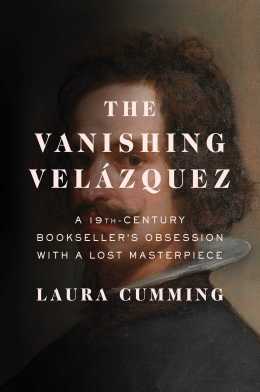
If you’re in non-fiction mood, you’re curious about one of the world’s greatest artists, and you’ve always wondered about the shenanigans that Charles I got up to before he ascended to the British throne in 1625, The Vanishing Velázquez by Laura Cumming just might fit the bill.  Cumming parallels the histories of the mysterious, brilliant Spanish court painter Diego Velázquez and John Snare, a 19th-century British bookseller whose accidental acquisition of a Velázquez in 1845 turns his life upside down. Velázquez served as the court painter for Philip IV during the zenith of Spain’s power in Europe and his paintings are known for their intimate realism. 185 years after Velazquez’s death, John Snopes buys what he thinks might be an unknown painting of British monarch Charles I at an estate sale and spends the remainder of his days devoted to proving it as a Velázquez at great personal cost. I didn’t need a hug after I finished this book, but I did need a trip to Spain. I settled for going out for tapas but I’m still a little bitter.

Velazquez

#hugitout

Action Items
Happy reading!