The Reason This House Is Not Clean

Until this year, I’ve been neutral about Jane Eyre. I’d read it once, so I was familiar with the fundamentals: Charlotte Brontë’s 1847 Gothic novel about the orphan Jane’s grim journey from unhappy schoolgirl to unhappy governess to unhappily falling in love with her unhappy employer, the emotionally unavailable Mr. Rochester.  Until this year, I thought the extent of my Jane Eyre experience was checking it off the list of Required Reading. Well, I was wrong, and there is no denying it anymore. Jane Eyre is flying at me from all directions lately and it’s starting to unnerve me. I am smack in the middle of an unintentional Jane Eyre moment. Until this year, I’ve never needed a literary exorcist. I don’t even know how to go about finding one. Craigslist? But it’s time to bring in a professional because Charlotte Brontë is messing with me.  I’m not sure why she has singled me out for her Jane Eyre immersion. I didn’t even know Charlotte Brontë read this blog.

This all started innocently enough this past winter at the sublime Kramerbooks in Washington, DC. (If you have never been to Kramerbooks, drop what you are doing and go RIGHT NOW. It’s beautiful. It’s got a bar. In the middle. Of the bookstore. GAH perfect bookstore is perfect.) Browsing the stacks for some holiday reading, my eye fell on The Eyre Affair by Jasper Fforde. It was not the title of the book that grabbed me so much as the author’s last name. It has two Fs. I admire a man who doubles down on consonants, so The Eyre Affair went on my buy pile. The Eyre Affair is the ffirst book in Jasper Fforde’s Thursday Next series, taking place in a clever alternate universe where classic literature rules pop culture and special agent Thursday Next is kept busy trying to save valuable first editions from a mysterious criminal. There’s also a portal that allows people travel in and out of their favorite novels, which sets the stage for an extended chase through Jane Eyre. I cracked it open New Year’s Day. It’s a ffun and very ffunny book.

One Eyre encounter does not a haunting make, right? Hang on. A few weeks after I read The Eyre Affair, I landed on the 2011 movie version of Jane Eyre during some late-night channel surfing.  I’d just had my Eyre Affair refresher course, so I thought it was neat that I’d stumbled across the movie and settled in to watch it for a bit. I’d tuned in near the end after the fire destroys Mr. Rochester’s Thornfield Hall.  (True confession: I don’t like Mr. Rochester so much. He makes me stabby. All props to Michael Ffassbender, but even he can’t make Mr. Rochester appealing to me.)  By the time the movie was over, I’d decided what Jane really needs is some mascara and a less rigid class system and then fflipped over to watch Captain America: The Winter Soldier for the 18th time, um, ffor science.

Big deal. Encounters with a book and a movie, both based on the same classic novel. So what? OKAY you asked for it. A couple of weeks after the movie, I have my hands on Lyndsay Faye’s tremendous new book, Jane Steele. Someone more attentive than I am would probably pick up from the title that I had another Jane Eyre-ster egg, but I am not known for my attention to detail or powers of concentration. This is because shiny things exist, and I should look at them. Jane Steele is Lyndsay Faye’s reimagining of Jane Eyre with Jane cast as a serial killer. I read the book and love it, but I am now taking notice there is a lot of Jane Eyre in my vicinity.

Coincidence, right? I figure since things happen in threes I must be done with Jane Eyre. NOPE. Charlotte Brontë is apparently just getting warmed up, because a month or so after I finish Jane Steele I idly click on one of those round-up articles, something like “Ten Of Today’s Novelists Recommend Other Novels” and out of the ten novelists, three—THREE—mention Jean Rhys’ Wide Sargasso Sea. Guess what? It’s a Jane Eyre-inspired book that imagines the backstory of Mr. Rochester’s attic-dwelling mad first wife. Charlotte has my attention. I immediately go get the book and immediately start reading.

Jean Rhys published Wide Sargasso Sea in 1966 as a prequel to Jane Eyre. It follows the marriage of an English gentleman (a huge jerk in this book–preach, Jean Rhys, preach) to Antionette, a Jamaican heiress. Cold and demanding, Antionette’s English husband changes her name, makes her move from Jamaica to England, and locks her in an attic after driving her insane. Hahaha! Just a story, right, Charlotte? We’re all just reading here, right? Right?…

 

Kramerbooks

Site of the first disturbance.


I know better than to fight a riptide so I am going to flip onto my back and float this one out. If I’m really living in a Gothic novel this year, then all of these Jane Eyre coincidences are actually foreshadowing and I’m due for some kind of freaky supernatural event any day now. Charlotte, if you’re listening? I am already going to re-read Rebecca, so please don’t send me any Daphne du Marier hints. I don’t think I can stand the strain.

Also, if nobody hears from me for a few days, just do me a ffavor? Please check the attic.
#eyreitout

Action Items
Spend New Year’s Day next year reading anything entitled A Non-Haunted Book About How To Be Ffabulous.
The Reason For A High Ponytail

My legion of fan is constantly bombarding me with demands for salacious details about my literary celebritying.  It’s an endless stream of questions like:
You’re going to stop blogging soon right?
Do you know how crappy your grammar is?
When will you settle that non-existent Twitter feud with Tobias Menzies?
Please, please, will you stop blogging? Soon?
But the question I get more often than any other is “How do you find time to read?” Okay, adoring fan, you asked and you shall receive. It’s AMA time. Going against my publicist’s advice, I am going to go all tell-all on this topic and pull the curtain back in the hope of satisfying my demanding public. There is both an art and a science to cramming maximum words into my eyeballs, except there’s no science at all and I’m not artistic. I’m just willing to exploit every available opportunity to read a book. Feel free to take notes!

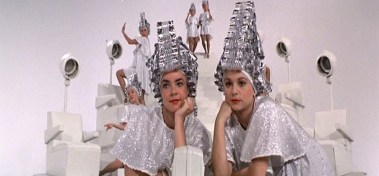
Before I let my crazy hang out share my reading expertise, though, a word about multitasking. That word is ‘IRRITATED’ because I am lobbying hard to set the word ‘multitasking’ on fire and throw it off a bridge. (Irony alert! Actually a great example of successful multitasking.)  The thing about multitasking is that it implies that two things can be done well at the same time and you know what that is?!? Taskshaming. I can barely do one thing well at the same time and I refuse to be taskshamed. There is only one very specific time in my day where two tasks intersect and I get both of them done simultaneously. It’s also a great example of found reading time. You guessed it – I read while I blow dry my hair.

I’ve been read-drying (Dry-reading? Blow-wording.) forever. Basically, it’s that I hate being bored, and nothing is more boring than sitting there for thirty minutes while drying my hair. It’s just like watching paint dry, except the paint is, you know. Hair. The truly embarrassing thing about this is that when I toyed with writing about this topic, I didn’t think I would have enough to say about it. HAHAHAHAHA. It turns out that I have given blow-read-drying a ridiculous amount of thought. I actually have a list of rules, for crying out loud. It’s probably too late for this warning, but it’s about it get nerdy up in here.

The cornerstone of blow-reading is that you start with a book and work your way backward. Well, not exactly. You start with washing your hair, then work your way around a book. It’s a space-time continuum, sponsored by Aveda and Barnes & Noble. (OMG! There IS science!)

1. Commit to having enough hair so that blow-drying is required. If a stylist offers to give you a “cute pixie cut you can just run your fingers through”, jump out of the chair, state commandingly “I WILL NOT PATRONIZE ESTABLISHMENTS THAT HATE LITERATURE” and storm out. Everyone will know you are a serious reader.
2. Reading while blowing your hair dry means zero control over how your head ultimately looks. More than once I have created an unintentional BumpIt at random places on my head because I zoned out with a book after wrapping half my wet hair up in a big round brush. I think of it as ‘charmingly lopsided’ but I’m actually projecting ‘fell asleep sitting upright on a plane’.
3. The finishing touch on all your accidental BumpIts is frizz. Because you lost track of how long you’ve been pointing hot air at your head because Erik Larson published a new one.
4. Ignore all hype about ‘this season’s hot new hairstyle!’ Your haircut choice is static because learning how to dry something new will cut into reading time. Mine is a breezy style that’s halfway between local afternoon news anchor and Laura Petrie from the Dick Van Dyke Show.
5. For every tenth book purchased, invest in a wad of ponytail holders.
6. Practice this: Look in the mirror, sigh, and put your hair in a ponytail. This will serve because you are going to wear a lot of ponytails. But you are also going to keep up with all of the New York Times best sellers, so SUCK IT, PONYTAIL.

Choice of reading material is key for successful read-drying. Personally, I like non-fiction, but you do you when picking yours. Below are some books that helped me pass a lot of blow time:
(Note to self: retain editor who will flag ‘blow time’ as poorly worded)
Under The Banner Of Heaven Jon Krakauer
The Greater Journey David McCullough
The Ice Master Jennifer Niven
Henry VIII: The King And His Court Alison Weir
All the biographies
All the autobiographies
All the memoirs ever memoired including Martin Short’s I Must Say: My Life As A Humble Comedy Legend, a book that made me cry so hard that I double frizzed my hair resulting in a genuinely terrible picture of me taken later that day at a drag queen brunch. But I digress.

Bonnet Dryer

Book club.

Equipment required for read-blowing is simple-a hair dryer and a book. Stay away from fancy words like “advanced drying technology” when purchasing your dryer. The smaller and slower it is, the longer it takes to dry your hair which makes all the difference when you are trying to work in an extra chapter. You know you’ve got it right when the motor sounds like a tired, indifferent group of bees.

You’re ready! Set your reading goal and go wash your hair. If someone asks you what happened to your head, just say you were multitasking like a boss.
#readinghacks

Action Items
Invest in some really good conditioner.


The Reason To Get It On The Side

Immortality is a perennial Top 3 finisher in the Literary Themes Pageant, just like Texas at Miss America. When it’s time to wrestle with the big ideas, all of your better-known Olden Days Writers pull out some form of eternity to make a point.  The Greeks had immortals descend from on high to mess around in people’s everyday business. Eighteenth century English Romantics were all “We are all immortal because nature! NATUURRREEEE!!!!” And then there are vampires, defining immortality ever since Bram Stoker decided to go all undead on our asses. In the past few years, literary vampires have been rock stars, the scourge of colonial America, and hot messes battling it out for supernatural supremacy in Southern Louisiana. There are also the curious Twilight vampires, who go all in on eternity by….going back to high school. Over and over. WTF. I don’t care how pretty Robert Pattinson is, he cannot make that idea remotely appealing.

All that being said, my favorite kind of immortality is the unintentional kind, the kind Julius Caesar achieved when a salad dressing first made in Mexico by an Italian-American during Prohibition intersected with a play that used ancient Rome to illustrate the problematic politics of transitioning from one British monarch to the next. Don’t believe me? Think about a Caesar salad right now. What comes to mind? TOGAS. You can’t buy that kind of viral marketing and brand reinforcement. Shakespeare and Julius Caesar have the Midas touch.
Me: Congrats on that whole most-famous-ruler-of-Rome thing
Caesar: K thx but I wanna be more immortal
Me: You can’t be more immortal than immortal
Caesar: I’m only immortal in Latin
Me: Yes
Caesar: I wanna be immortal in ENGLISH
Shakespeare: I’m on it

My I ♥ SHAKESPEARE list has a definite lean toward unnatural death. There is hella stabbing in all of the plays I really like. Why I prefer my Elizabethan entertainment pointy and bloody is ultimately for my court-appointed psychiatrist to determine, but since I’m not violating any of my restraining orders I’m not going to  worry too much about my subconscious. I love Julius Caesar because it meets minimal stabbing requirements and because it includes the searing, jaggedly perfect “I come to bury Caesar, not to praise him” eulogy. In another unintentional twist, it’s also the Shakespeare production that I have seen the most often, including one staged on a set that looked like a building construction site where all the actors wore hard hats. Yellow hard hats. The whole show. Well, I am assuming they were actors. It’s certainly possible I stumbled upon a group of extremely politically savvy Shakespeare enthusiasts renovating a theater.
Caesar: Why do I have to wear the hard hat
Me: OSHA regulations for artistic integrity zones

Julius Caesar opens with Caesar fresh off a military victory and ruling over a happy and peaceful Rome. Because no good deed goes unpunished, and because it would be a terribly short play otherwise, Caesar’s motivations come under question by Brutus and Cassius, his two closest advisors, the Kelly and Michelle to his Beyonce. Not convinced that Caesar has Rome’s best interests at heart and suspicious that he wants to crown himself as King, Brutus and Cassius decide to stab their way out of their anxiety about the future and assassinate Caesar at what may go down as the worst committee meeting ever.
Caesar: I brought doughnuts!
Everyone else: Stab stab stab
Caesar: I thought you liked Krispy Kremes!
Everyone else: We told you we are low-carb, asshole


Publicity stunt

Publicity stunt.


The delightfully capricious thing about immortality is that you can’t choose it. It has to choose you, and when it does it’s liable to be for something you couldn’t possibly anticipate. Julius Caesar was one of the greatest military strategists who ever lived, famous for his battlefield victories fought for the glory of Rome. Then Shakespeare comes along and tells his version of Caesar’s story, and Caesar becomes famous for being assassinated and for his last words that he never actually said, “Et tu, Brute?”. Three hundred years later, Chef Caesar Cardini improvises a salad on a busy night with a handful of ingredients he had on hand in his restaurant kitchen. It catches on in a big way because DELICIOUS and suddenly Julius Caesar is famous all over again because his likeness is the go-to illustration on almost every bottled version of Caesar dressing.
Caesar: Wait. What?!?
Me: I thought you knew
Caesar: Is this a joke? I hate salad
Me: Just eat the croutons. It’s what I do

Given the choice, what would Julius Caesar have preferred? Fame from what he actually did, fame from a fictionalized version of himself, or fame from aisle 3 at the grocery store? It’s his embarrassment of riches that he doesn’t have to pick. He gets it all. Over two thousand years later, we’re still talking about him. Shakespeare has done pretty well too, but he’s got work to do in the food department because I can’t remember the last time I ordered a Shakespeare salad.
Caesar: I’m not picking any of those
Me: Okay how do you want your fame
Caesar: I want to go to the New York High School For The Performing Arts
Me: …so you want to spend eternity at high school
Shakespeare: I’m changing my name to Cookie Dough Ice Cream
#passthecroutons

Action Items
You probably want Caesar salad by now.


The Reason To Put It In Writing

A source water of my ever-flowing river of shame is that I am not capable of keeping a diary. My life history is littered with blank journals that have really pretty covers. Well – not entirely blank. More accurately, my life history is littered with journals that have the first five pages filled in with words. Titillating, insightful words like “Dear Diary, OMG queso is my favorite” and “Dear Diary, I need a new pair of black pants because I can’t get the queso stain off the ones I wore last night”. After the first five pages, idle doodles take over, harmless little drawings of missiles dropping on a diary factory or diary factories exploding in missile attacks. By page eight, it’s nothing but empty paper. Flipping through those blank pages, I am forced to admit yet again that I bought yet another journal because I thought the cover was pretty. Keeping a diary involves discipline and self-reflection and I am not here for any of that. I am here to binge on cheese until my memory is foggy.
Diary: Congratulations on your purchase! Whatcha gonna write
Me: I’m going to record my thoughts about the world and meaning of life
Diary: Waiting you out here
Me: FINE I am drawing puppy faces using only circles
Diary: Draw some kittens too

While I’m busy not writing in my diary, I love to read other people’s. I especially love reading cookbooks for the stories they tell about how people lived through food. What was important, what was available, what was relevant in a culture is all evident in what flowed through the kitchen. I’ll read any cookbook like a novel, but my favorite kind of cookbooks are the ones that include the stories and context for a recipe, like when an author tells her life story by describing exactly how she positions her crabmeat salad on her buffet when she entertains. Specifically, I love reading cookbooks by the marvelous Julia Reed. (Spoiler alert-crabmeat goes piled on a giant platter, mixed with mayo, served with toast points.)
Diary: Now describe the toast points
Me: This feels like homework
Diary: How it works is, you write stuff down
Me: Boooring
Diary: What are you drawing?
Me: Missiles bombing a toast point factory

Julia Reed is a Mississippi native, New Orleans resident, author, and a contributing editor at Garden & Gun and Elle Décor magazines. She is also a consummate storyteller, flinger of parties, and feeder of people as is evidenced in her books Ham Biscuits, Hostess Gowns, and Other Southern Specialties and But Mama Always Puts Vodka In Her Sangria!. Julia Reed’s stories read like the best diaries, with a casual, intensely personal feel. Watching her glamorous mother throw legendary cocktail parties in her small Mississippi hometown, Julia Reed found her own hostess rhythm when she left her home state to work in the cosmopolitan Northeast.  She describes coming into her own as a writer, a professional, and a hostess, from the college student parties done on a budget to the years she lived in New York as an editor for Newsweek, blowing people’s minds with plates of deviled eggs and pimiento cheese sandwiches. As magnetic as Julia Reed’s personality is on the page, I can’t imagine what it’s like being in the room with her while she convinces you to try just one bite of her lemon squares. (Okay, fine, she would never have to convince me to eat a lemon square. I’m not dead inside. However I do loathe eggs in all their forms but I’d still like to have her try to persuade me to eat a deviled egg. I won’t eat it. I don’t care if that damn egg is stuffed with Tom Hiddleston and a pair of diamond earrings. But I’d still like her to try.)
Diary: You can’t chew earrings, duh
Me: No it’s hyperbole
Diary: How would you even get Tom Hiddleston in an egg?
Me: It’s—no, you wouldn’t, I’m just saying-
Diary: Tom Hiddleston doesn’t go to small parties
Me: This is why we can’t dialogue

Julia Reed’s books are delightful, loaded with intimate and fascinating memories. They make me wish I’d commit to any kind of journaling, but the closest I come to diary entries are all the margin notes I have scribbled in all my books. I don’t discriminate-I’ll mark up any of my books when the mood strikes-but I really go to town on my cookbooks. It’s interesting when my notes don’t make any sense, like when I just use punctuation. What the hell do I mean by the really big question mark I wrote next to the recipe for an eggplant enchilada dish? Was it “why did I make this crap??” or “how did I live this long without making this delicious crap??” or “Why would I ever make this eggplant crap??” I don’t know because I was too lazy to write out even one word that summed up my impression. Also right now I am really understanding why I will never grow up to be Julia Reed. I’ll bet she uses words and punctuation in her cookbook notes.

Maybe not all hope is lost for a written record of my life. Surely I can access my last ten years worth of texting transcripts and put them in a binder. Succinct, specific, vivid – in fact, it’s better than a diary. It’s a diary slam.
Diary: That is insulting
Me: Think of your nice, clean pages
Diary: When you put it that way
Me: Maybe just one more circle puppy
#diarygoals


Boom

Artist’s rendering of artist’s rendering


Action Items
The Baddest Mother Ever has mad journal skills. See for yourself here.

If you’d like to arrange for Julia Reed to keynote my next birthday party, thank you! You shouldn’t have.

The Reason To Pay It Backward

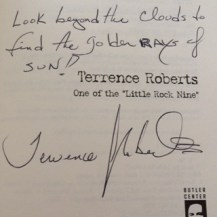
As anyone does, I take everything Matthew McConaughey says very, very seriously. So when his character on True Detective said “time is a flat circle” while trying to explain why time is a flat circle, I paid attention. Until that point, I considered time to be fairly linear. Except during a 60-minute workout. Do you know how long 60 minutes takes at the gym? About 4,00,000000,00,2 minutes. In that instance time is less like a flat circle  and more like a tremendously annoying parabola. But time being a flat circle? That was such a super-fancy way of describing that what goes around, comes around, that it got me thinking about the unpredictable ways that karma will serve up tasty goodies. Like reading a powerful book, then meeting the person that wrote it. (I’m not a namedropper so you’ll have to wait to find out I met Dr. Terrence Roberts, one of the Little Rock Nine. IN PERSON.)

But first, a word about fangirling. Fangirling is hard work, y’all. It’s a nuanced art form requiring endless hours of practice to strike just the right note of obsessive incoherence. After all, when meeting someone you admire, why behave in a rational, mature way? It’s so much easier to give in to temptation and collapse into loud babbling. If you are the kind of person who can keep your cool when you are introduced to someone of whom you are a fan, I congratulate you and can you please tell how you do that? Because when I am introduced to someone I think is awesome, my feelings tend to fling me around like a rodeo bull, flailing me awkwardly all over my immediate vicinity. It makes the idea of meeting a familiar stranger a horrifying prospect. Like The Hulk, I must carefully avoid situations that might trigger my fangirl mutation. Except when I can’t avoid them, like when I got to meet Dr. Terrence Roberts. IN PERSON.

In 1957, Central High School in Little Rock, Arkansas was desegregated, forced by the Supreme Court’s Brown vs. Board of Education decision to end the “separate but equal” education policy that divided life by race in the South. Attempts to integrate schools were routinely met with hostility and defiance. In Little Rock that manifested in targeting the nine African-American students who desegregated Central High School with daily death threats, harassment, and violence. This organized campaign meant to drive the Little Rock Nine out of Central resulted in the dispatch of the 101st Airborne to ensure the students could attend school.  Dr. Terrence Roberts writes about living that experience and the subsequent path his life took in his memoir Lessons From Little Rock. It’s a powerful book, in no small part because of the way Dr. Roberts recreates the unbelievable day-to-day atmosphere of danger and terror that he endured.

Dr. Roberts is retired as a college professor, owns a private management consulting firm, and speaks all over the country. I was fortunate enough to see him speak, IN PERSON, at a local school. Keeping the attention of a room full of restless students for the better part of an hour is no small feat, but you’d never know it by Dr. Roberts. He is a gentle, unassuming man with a compelling presence. I think he commands attention because he doesn’t deal in platitudes. He doesn’t have to. He spent the better part of a year willingly walking into a building where the majority of the people he saw wanted him to go away and die and would have considered themselves heroes for making sure he did just that, so the conviction behind his words isn’t power-of-positive-thinking-hug-it-out stuff. He lived a truly ugly powerlessness, and when he describes how he lived with that fear, persevered, and made decisions that eventually carried him up and out of that world, it’s hard not to listen.

At its essence, fangirling is about gratitude. When someone you don’t know impacts your life, they become a part of your everyday world. It’s a weird, one-sided intimacy that doesn’t translate well into three-dimensional interactions because there just isn’t a way to make gushing not moderately creepy. The gratitude is a silent message, sent into the ether. ‘Thank you. What you did was so hard. I don’t know how you did it. My world is better for it. Thank you.’ Then you meet your hero and it’s all “HI. I LIKE YOUR BOOK. I LIKE IT FINE. I’VE BEEN SENDING YOU THOUGHTS SORRY IF THEY GOT ALL OVER YOU.’   There aren’t words that are adequate to the task of expressing the depth of “What you did matters”, so I’ll pass a story on instead.


IMG_0383

Autograph. Would also have accepted “Thank you for suppressing your crazy.”


About a week after the assembly, I was talking with a friend who was there and who also got to meet Dr. Roberts IN PERSON. We were basking in our shared fangirl glow. She’s a teacher, and she was telling me about one boy in particular in her class who has very little patience with himself. As she put it, “He’s a smart kid. He just gives up.” She’s been coaching him all year on how to work through his frustration with little success, watching as he fell further behind, which only served to increase his frustration and decrease his patience. The opportunity to break the cycle presented itself the day after we saw the speech. Her student brought her yet another blank worksheet, saying he didn’t want to do it and when could he go outside and play? Flashing back to the speech the day before, she channeled her best Terrence Roberts. Remembering her student loves soccer, she asked him if he would give up, stop running on the field, while going for a goal. When he said he wouldn’t, she pointed at the worksheet. “Then why are you giving up on that? It might scare you. But you don’t give up.” And in the way that words make magic, that lit a fire, and suddenly she has a student who won’t give up, no matter how much crossword puzzles aren’t soccer. A man given the opportunity to stay in school made a difference for someone with a different struggle. It’s a full circle.

I’m glad I exercised enough self-restraint not to scare Dr. Roberts in public. Since maturity is a goal of mine, I’m chalking that as a win. I was able to control myself mostly because my inner voice was threatening me in my head (shutUP!shutUP!shutUP!) It’s not the kindest of mantras but it prevents me being removed from the premises most of the time.

True story: my inner voice sounds exactly like Matthew McConaughey.

#inperson

Action Items
Check out Atlanta’s Center For Civil And Human Rights .


The Reason For Delayed Gratification

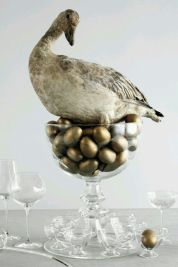
There is something so irresistible about the idea of easy money. Whether you’re stealing it, winning it, or earning it in your artisanal pop-up meth lab, the wish fulfillment fantasy that surrounds a surprise windfall is one of the best fairy tales there is. In a jackpot culture, where multi-state lotteries make national news, how humans deal with unexpected largesse reveals everything about their character. We all like to think we would behave selflessly and generously if put in that situation. I’m sure YOU would be angelic. You seem really nice.  But let’s face it, greedy jerks are more interesting to read about. Characters looking for easy money make bad choices leading to dumber choices leading to fleeing down a beanstalk from a ticked-off giant with a stolen bag of gold coins, or fleeing from the criminals that financed a view of the green light on Daisy’s dock, or fleeing from a ticked-off giant with a stolen bling-flinging goose.
Me: I don’t like to criticize
Jack: yeah
Me: but maybe a softer target
Jack: go big and go home
Me: you’re doing that saying wrong

Take free money, add awkward family dynamics, and you have the inheritance cluster rodeo that is The Nest, Cynthia D’Aprix Sweeney’s new book about four adult siblings squabbling over a pending trust fund payout in present-day New York City. The life-long promise of the money coming from the fund (nicknamed the Nest) gets this family completely twisted. Sweeney completely nails the arrested development that dogs inter-sibling-ary relationships and the self-destructive fallout that results from spending your chickens before they hatch. It’s funny, moving, and almost painfully real.
Jack: Geese
Me: Huh?
Jack: Spending your geese before they hatch
Me: That is your waterfowl bias talking

Some books hook me with beautifully crafted language. Some grab me with a wickedly twisted plot. And some, like The Nest, get under my skin with characters so well-conceived that it feels like the author isn’t writing fiction but instead recording notes on an anthropological expedition. The entitled siblings in The Nest are so self-absorbed and selfish that it stressed me out. My favorite is Leo, the jackassiest of all jackass brothers who ever jackassed–but really, all of these siblings are spectacularly jackassy. Sweeney creates some really squirm-inducing decision-making, so much so that I (allegedly) tried to reason out loud with the people in the book. Because yelling “STOP WHYYY ARE YOU DOING THAT” is  the best way to get results out of your fiction. No matter how much I tried to get their attention, the characters in the book ignored me, so I managed my discomfort by engaging in some positive visualization. That’s right: I pretended won the latest billion dollar jackpot, then I fake spent my imaginary winnings in the most humanitarian, saintly way possible. Step aside, Mother Theresa.
Jack: Are you upset because a giant is chasing you
Me: No
Jack: I get upset when giants chase me
Me: Omg a giant isn’t chasing me
Jack: I’m saying, it’s upsetting

Relief Map  The Nest spends a lot of time detailing the endless search for the perfect real estate. Buying in an up-and-coming neighborhood at the bottom of the market is sexier than Chris Hemsworth cuddling a golden retriever puppy while saying you were the best one in the threesome. Self-worth is enmeshed with having the ideal street address. I get it. If I had all the money in the world to spend, I’d want my custom-built domicile to reflect exactly who I am. You guessed it – my dream property is a personalized water park. Not only will it have state-of-the-art waterslides, it will have a connecting waterslide around the perimeter so I can waterslide to each waterslide. Because it’s a water park. Not a walk-on-dry-land-to-get-to-water park.

Pressed For Time The most prevalent lottery fantasy is using your new money to buy your way out of your least favorite chore. Yes, I could feed the hungry or open a school, but is that going to get me out of doing laundry for the rest of my life? FOOLED YOU that’s a rhetorical question. The Nest characters hope to use their windfall to retire early and that’s okay, I guess. I hope to build a dry cleaners in my backyard. I’m undecided if I need to hire someone to stand at my back door collect my laundry every day. I don’t want the neighbors to think I’m too diva to walk to my dry cleaners.

Check It Out The siblings in The Nest struggle because they all have a severe case of keeping up with the Joneses. The emphasis on having the right clothes, the right kind of house, all the cachet of a Manhattan life, costs them. I’m above this kind of conspicuous consumption, of course, and that I why my final act of lottery boom spending will be building a library. It will be just like the Library of Congress only bigger and better and I get my own parking space. It will also have hammocks because I like to recline when I am reading.


679eb4bc04796260f6b60a8a8cccc943

Weird financial planning meeting.


Since I am fresh out of beanstalks, and my chances of winning the lottery are infinitesimal, I am sadly reconciling myself to a simple life of doing my own laundry and annual waterslide rides.  I’m all set to work hard, save, and invest. As a backup plan, I’ve got a friend who has promised to show me how to spin straw into gold.
Jack: Bad idea
Me: Says a guy who baits giants
#beanstalkproblems

Action Items
A Book Of Giants by Ruth Manning Sanders is a collection of European fairy tales about giants. Because you need a book of fairy tales and it should be about giants.

The Reason To Tip The Bouncer

There are a lot of books I have not read. Most of them, in fact. (That is if my math is correct. My math is very dicey because I usually forget to carry the 2, but let’s assume my calculations are close.) Like the weekend crowd hoping to get past the velvet rope, my ‘to be read’ list is perpetually in flux. I’m shallow and easily distracted by younger, shiny new books, and I feel a little guilty when something jumps in front of my eyeballs ahead of other titles on my list that are languishing on the sidewalk, waiting for me to notice them.  The guilt intensifies when I reserve a spot at the top of the list for books that technically don’t exist, the yet-to-be-published books by my favorite authors.  But this week, I don’t feel guilty at all. This week, I don’t care how long the other books have been waiting to get into the club because Lyndsay Faye’s new one, Jane Steele, is out and she gets to go to the front of the line.
Book 1: we’ve been waiting on this sidewalk forever
Book 2: And that PYT just waltzes right in
Book 1: I knew I should have worn my tube top

‘Lyndsay Faye’ is probably translated from the German “kickass pixie who writes yummy books”.  Her books are vivid, meticulously researched, flashpoint smart and explosively fun to read. Her Gods of Gotham trilogy, about the birth of the New York police force in 1845, centers on brothers Timothy and Valentine Wilde.  Timothy and Valentine are pivotal players as the fledgling, fragile police force attempts to protect the fledgling, fragile idea of equal treatment under the law for everyone in the city, not just the privileged wealthy. Lyndsay Faye’s characters are refreshingly complex and her stories are electrically entertaining, and normally I’d make you borrow my copies to read for yourself but mine are autographed by the actual Lyndsay Faye so you can look at them but only if I hold them. Since I first found Gods of Gotham, I have devoured everything Lyndsay Faye’s written and I’ve been waiting for Jane Steele forever.
Book 1: …so to be clear this is about a book she hasn’t read?
Book 2: Yup. Should call the blog NoBookReasons. BWAHAHAHAHA
Book 1: No wonder the bouncer won’t let us in

In Neanderthal times, the only way to get a just-released book was to take your 4-wheel-mastodon to the Neanderthals bookstore. If you survived the trip, it was highly likely that the new release you were so excited about was sold out. There you were, at the Bookstore Cave, with no copies of the final book in the Vampire Pterodactyl series to be had.  Now, lining up to get the Next Big Literary Thing is as easy as clicking the pre-order button in your Amazon account, and BOOM-the book shows up on release day, guaranteed. It’s almost too easy, actually. Periodically, I’ll check on my open orders to ensure I have not pre-ordered the same book twice in an anticipatory frenzy. In fact, I heard a story once about someone who ordered three copies of the fifth Harry Potter book because she forgot she’d already ordered it and no it was NOT me it was a friend ok?
Book 1: you get that it’s her that did that right
Book 2: (sings) You got three copies of Book Five and allll you need is Book Six
Book 1: Not so loud
Book 2: GET IT I’M ALANIS BOOKISSETTE
Book 1: We are never getting in this club

Mastodon_color

Luxury model.

Considering how fickle I am, I think it’s time to admit some of the books on my TBR list are never getting past the velvet rope. I hate to think there are books I will never read, but there are other, better clubs waiting for these topics:

Anything spiders Spider histories. Non-fiction spider anthologies. Fictional spiders. This includes Charlotte’s Web, which I read once and absolutely would have skipped if I had known I was going to have to look at a picture of a spider every 5 pages. Wasn’t Wilbur worried that when he went to sleep Charlotte was going to crawl all over his face? I WAS.

Artillery manuals I know what you are thinking: “But what about your future best-selling book? Won’t it have artillery in it?” Yes! It will! I am too lazy to actually research artillery, so here is an exclusive preview of how that part of the book is handled:
“She went to the artillery store, but she could not stay because of her severe artillery allergy.”

Steig Larsson I know. You read The Girl With The Dragon Tattoo and loved it and loved the movie then you read all the other ones and you loved them too. Believe me, I am jealous. I tried, twice, but I could not get through it. It’s embarrassing and I blame all the artificial sweetener I had in the 90s.

It’s time to fire up my Kindle and find my reading spot. It’s safe to assume that I am going to love Jane Steele. It’s a reimagining of Jane Eyre, with Jane as a heroine serial killer. I am SO in. I can get you in too. I know the bouncer.

#VIPtable

Action Items
Find all things Lyndsay Faye here. In addition to the Wilde brothers trilogy, she wrote Dust And Shadow, which any Sherlock Holmes fan should snatch up immediately.

The Reason I’m Not Invited

Shopping at bookstores is something I can do for a long time. I’m not gloating about my superior concentration abilities. I can do it for a long time because I like to do it. When I have to do something I don’t like to do, I’m not going to do it for a long time and I am going to fake an ankle injury to get out of doing whatever the non-like thing is. But bookstores are my creampuff-filled universe, and I prefer going alone. (It’s not that I don’t like you. I really do – in fact, I think you are amazing.) But the thing about being at the bookstore with you is this: When you are ready to go, I am not. When you give me another twenty minutes, thinking I am wrapping things up,  I am still not ready to go. When you are REALLY ready to go, I am very much not ready to go. When I don’t invite you to the bookstore with me, I’m not snubbing you. I’m sparing you an afternoon of watching someone giggle and cry while picking out books to purchase. To understand the real craft of social snubbing, go no further than Edith Wharton.
You: I’m ready to go
Me: I can’t, I hurt my ankle
You: I need to take you to the ER
Me: I can’t, I hurt my ankle
You: you can’t fake an injury to get out of having a fake injury

Edith Wharton was born in 1862 with the bluest of blood into one of the oldest of the Old New York families. As a young lady of gentle birth and privilege, all that was expected of her was to marry well. Instead, she became an accomplished author, publishing novels, poetry, short stories, and non-fiction and was the first woman to win a Pulitzer Prize for fiction. Her work chronicles America’s Gilded Age. If F. Scott Fitzgerald defined what it was like as an outsider to long for acceptance by America’s wealthy elite, Edith Wharton was the ultimate insider, telling the stories of proper people doing things properly and not so properly. She knew all about trying to sit at the cool kids table, when the cool kids table was in a formal dining room, seated thirty-two people, and had  20-piece place settings that included finger bowls.
Society: so just get married and do lady stuff ok
Edith Wharton: I can’t, I have this ankle injury
Society: then be an old maid
Edith Wharton: oh I would but this dang ankle

The Age of Innocence is the best known of Wharton’s novels, but I have a soft spot for The Buccaneers. It tells the story of trying to crack social codes in that most stressful of situations: when you and your sister have to sail across the Atlantic Ocean to find husbands in the English aristocracy because your family money is too new to entice anyone of quality in New York. That is hard-core snubbing-when your whole home state of dudes won’t look at you twice because you’re not American long enough, and none of the women in England will give you the time of day because you are so very American. Wharton perfectly captures all the cringe-worthy interactions that result from perpetual social rejection. The rules are, you don’t know the rules because no one is going to tell you the rules but no matter what don’t be yourself, ever, but it’s really irrelevant how you act because nobody will like you. It’s hard not to imagine myself trying and miserably failing to win friends and influence people while talking about my interests with turn-of-the-century British peerage.  There are endless opportunities for embarrassment. Choosing the wrong fork at dinner. Accidentally using profanity. And then, there’s trying to explain why I take tap dancing lessons.
Me: I take tap!
Lord British: uh-huh
Me: This finger bowl soup is delicious
Lord British: Please excuse me, I have this nagging ankle injury

I swear, taking tap was not my idea, but not not taking it was my idea. It’s not like I studied dance for years as a child and then took it back up just to keep my skills fresh. It’s not that I wanted to be able to utter that most mature of phrases “Hey, you want to come to my dance recital”? It’s not like I wanted to wear sequined dresses and false eyelashes while desperately trying to remember if I’m supposed to be doing a cramp roll or a drawback. (I am 100% lying about the false eyelashes.) (Okay and the sequins.)

You know what’s adorable? Little kids dancing. Little butterball toddlers in tutus turning around on their tiptoes. 8-year-olds, defying gravity as they jeté from corner to corner. Long-limbed, long-necked adolescents, executing ever more complex choreography with grace and speed. Ok, now take all that adorableness, set it on fire, throw it in a gas station dumpster, and you get the idea of what it’s like to watch a fully formed adult person with zero dance experience learn how to tap dance. It. Is. Painful. I know exactly how you feel, because I have had to see my reflection in the studio mirror shuffle-ball-changing for the past four years. Honestly, I have no excuse. I just keep showing up in the hopes that Glinda the Good Witch  will be there at dance class one day, granting Magic Feet wishes.
Glinda: I’ll grant you your heart’s desire
Me: Please make me good at tap dancing
Glinda: GAH my ankle

5838677365_fd8b0d5d74_b

This is a metaphor.

There is no place in Edith Wharton’s tasteful universe for my brand of awkward. Maybe I’m just fooling myself, but I don’t want to hang out with those snobby drags anyway. The cool kids might have an oyster fork, but I’ve learned most of the Maxie Ford (a tap step so mean it will pinch you just to make you cry). I know I am definitely not invited to dinner, but you know what? They are not invited to my recital.

#ouchmyankle

Action Items
The Buccaneers was in progress at the time of Edith Wharton’s death in 1937.  It was completed by Wharton scholar Marion Mainwaring and published in 1993.


The Reason For The Breakdown

Recently, I accidentally attended a one-man show put on by a Physics Clown. (My laptop wanted to autocorrect that to Psychic Clown. Is that a thing? And what would a psychic clown predict? Future Cirque du Soleil show themes?) He did exactly what you would expect a Physics Clown would do, demonstrating all manner of science principles while wearing a clown-themed tie-dyed shirt and using colorful props. He had a Chinese yo-yo, a balance board, a unicycle…you know. Science clown stuff. In the interest of clown transparency, prior to each demonstration, he would explain how long it actually took him to learn to juggle, or manipulate gravity sticks, or use the Kendama toy. The story was consistent across the board—it takes a long time to master all of those skills . Depending on the trick, it was years to many years. There is a process, with time invested in making sure what you’re doing is not only done well but that it’s worth watching. It’s the kind of dedicated, focused attention that turns a person into a successful Physics Clown – or into Steve Martin.
Psychic Clown: I predict where you’re going here
Me: You’re good

Steve Martin is a stand-up comedian, actor, film director, dancer, art collector, playwright, musician, and author. I’m not sure why he does all that stuff. Honestly, just one or two of those things would be in good taste. I’m not a psychiatrist or anything, but to keep piling like that on probably speaks to a desperate need for validation. Despite the fact that I think I’m contributing to his narcissism, I am a big fan of his writing. He’s written fiction (Shopgirl, Cruel Shoes), memoir (Born Standing Up), plays (Picasso At The Lapin Agile The Underpants), and he is a regular contributor to publications like The New Yorker (some of the New Yorker pieces are published as a collection in Pure Drivel). While I was composing this paragraph, he published a technical manual on operating DVRs and the world’s most insightful Trader Joe’s shopping list. He has been consistently funny, consistently smart, and consistently entertaining in all of the mediums. He makes it look easy, and you don’t make anything easy without working incredibly hard.

As much as I love his books, my favorite Steve Martin piece is an essay called “Banjo” he wrote for the 1999 Oxford American magazine’s annual music issue. In it, he describes his love for the five-string banjo and details how he taught himself how to play, breaking down the songs on his bluegrass records to tortuously slow speeds and practicing in his car to spare the ears of everyone around him. Chord by chord, he developed his musicianship and proficiency, working his way up to that coveted banjo trophy: the breakdown, those blisteringly fast picking solos that define the five-string banjo in bluegrass music. The essay is joyful in that way that indulging yourself in discussing your favorite topic is joyful. It’s a banjo lovefest geekout. If you’ve ever seen Steve Martin play banjo, you see that same joy. He loves to do it and it’s fun to see, unlike, say, sitting in a chair tapping away at a laptop. There’s no such thing as a flashy typing solo.
Physics Clown: you should add some science
Me: how
Physics Clown: ride a unicycle while you’re writing
Me: my insurance company says I can’t do that anymore

Martin

Cannot show entire cover due to unauthorized status, but I can confirm that is Steve Martin’s neck

The act of writing is not in and of itself very interesting to watch. It’s a person and a keyboard and endless hours of hilarious Vines used to procrastinate to avoid actually writing. (Okay, that person is me, but if you think I’m not going to watch a cat get its head stuck in a Kleenex box, you’re crazy.) It’s very intense and dramatic internally. Externally, it’s watching paint dry, but with more profanity. It’s not the kind of activity that will draw a live audience, but there are some instances where a cheering section would come in handy. Like when I pick the perfect verb or use the Oxford comma.
Physics Clown: Just you and a laptop? That’s it?
Me: Yup
Physics Clown: Does the keyboard explode?
Psychic Clown: No
Physics Clown: (sigh)

Since I’m writing this stuff anyway, I may as well throw my own high-five parties.  Like all of my problems, I am solving this one with books. When I’m draggy and unmotivated, it’s all about creative inspiration. I’m no Physics Clown, but I like to read, and reading Steve Martin is a master class in, um, smart people who use words right and good. It gets me fired up. Stand back, because I am about to rock this place with a 10-minute air banjo breakdown. Pay attention, because I’m getting better all the time.
Me: Ask me that again
Physics Clown: Does the keyboard explode?
Me: YES WITH AWESOMENESS
Physics Clown: (sigh)

#pickyourclown

Action Items
The Oxford American’s music issue is amazing. Check out how to get it.
Steve Martin does a bunch of stuff and he brags about all of it.
“Banjo” is included in The Oxford American Book Of Great Music Writing.


The Reason It’s Personal

I am a hopeless memoir addict. I’d like to attribute this to some erudite factor. However, I have no erudites to give. In further proof of my superficiality, I love memoir because I am nosy as hell. I want all the details and all the particulars, so it’s safe to say that memoirs are the book version of my favorite kind of conversation. Here are three that I love, so if you’re looking to pick up a book this week, maybe one of these might do you.

The House On Sugar Beach by Helene Cooper

Helene Cooper’s life in Liberia was ended in a violent military coup that criminalized her heritage, turning her into a hunted enemy in her home country. In escaping to America, she had to leave people she loved behind. There are larger questions examined in this book about the fragility of populations of a nation in crisis, the brutal truth of being considered human collateral damage, and the struggles to stabilize a chaotic geography. What stays with me, though, is the profound way McDonald’s displacement affects her and the longing for home that echoes through the whole book.

Memior 1

The World’s Largest Man by Harrison Scott Key

This book offended me because there are so many perfect sentences in it and 85% of them are belly-laughing hilarious. Why can’t I write a book like that? Then, in the acknowledgements, there is a word search puzzle filled with the names of the people Harrison Scott Key wants to thank, and when I found THAT I had a rage stroke of envy and now I can barely look at you when I am telling you to read this extremely funny, extremely moving book about growing up in rural Mississippi when you really should have grown up somewhere like downtown Toronto. Or maybe the greater DC area. Anyway go read it. I’ll just sit here and fume.

memior 3

The Tender Bar: A Memoir by JR Moehringer

J.R. Moehringer’s book about the men in his life who step in to fill the void left by an absent father and the family bar which served as the grounded center of his childhood universe utterly astounded me. I have recommended it over and over, and of course had to replace my copy because I gave it away. The Tender Bar is also the only book that has ever gaslighted me because when I read Open by Andre Agassi, I had no idea that J.R. Moehringer had served as Agassi’s co-writer, and I spent the whole book freaked out at how much it reminded me of The Tender Bar.  So, what I’m saying when you are reading other books be careful because The Tender Bar is probably watching you.

Memior 2

#personalquestions

Action Items
Happy reading.